
Creativity • Problem Solving • Parent Guide
Why Kids Should Practice Divergent Thinking
Finding an answer and generating ideas are different skills. Divergent thinking helps children create possibilities when a problem does not come with one obvious solution.
In coding classes, students often do well when a problem resembles something they have seen before. A harder moment comes when the path is unfamiliar and they must generate possible approaches. Ideas are not guaranteed answers—they are possibilities to explore.
Why divergent thinking matters
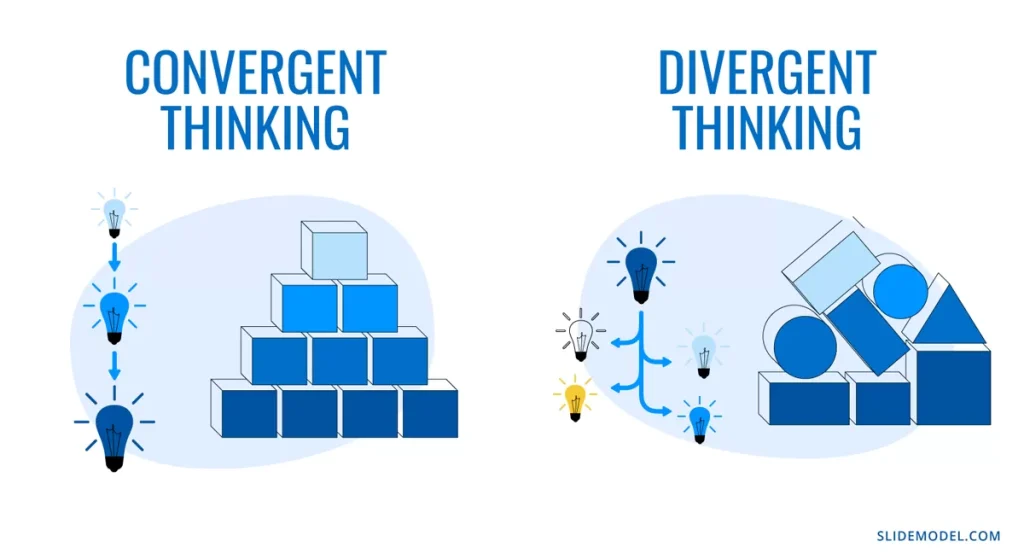
Divergent thinking encourages children to move beyond the pressure to find “the right answer” immediately. It supports creative problem solving by generating multiple possibilities before deciding which one deserves more testing.
This is especially useful in unfamiliar situations. Whether a child is designing a game mechanic, solving an engineering problem, writing a story, or working through an everyday challenge, the ability to ask “What else could I try?” creates more paths forward.
Help kids explore possibilities
When a problem is new, generating ideas is less about knowing and more about exploring. Children practice divergent thinking when they ask “What if?”, compare several approaches, or try a possibility even when they are not sure it will work.
In coding, a student might propose several ways to create a game feature, test one, learn why it fails, and use that information to improve the next idea. Exploration, failure, and iteration are part of the process.
How parents can support divergent thinking at home
- Make room for open-ended play. Building materials, art, stories, games, and other activities without a single endpoint give children room to invent their own goals.
- Ask “What if?” questions. Try questions such as “What if the game worked differently?” or “How many ways could we build this?”
- Value ideas before judging results. During brainstorming, separate generating possibilities from deciding which one is best.
- Encourage reasonable creative risks. Trying something that might not work teaches children to use the result as information.
- Balance structure with unstructured exploration. Instructions are useful, but children also need opportunities to decide the next step themselves.
The long-term benefit
Divergent thinking supports creativity, flexibility, adaptability, and resilience. It helps children become more comfortable approaching problems whose solutions are not obvious at the beginning.
Give idea generation a structure.
SCAMPER is one practical framework for helping children deliberately generate different kinds of ideas.
Related resources
Psychological Safety and Creativity
Developing Self-Directed Learning Skills
Encouraging Productive Struggle