Parent guide • Coding • AI readiness
If AI Can Write Code, Why Should My Child Learn Coding?
Why hands-on Roblox Studio and Minecraft Modding still matter when children are growing up with AI tools—and how coding helps build the habit of questioning and improving results.
Yes—because learning to code is about more than typing instructions.
AI tools can already suggest ideas, generate computer code, and help people make things they could not easily build on their own. So it’s reasonable for parents to ask whether learning to code still matters.
We think it does. Not because every child needs to become a programmer, or because AI will never be able to write good code. Learning to build with technology gives children something different: firsthand practice in turning an idea into a system, predicting what should happen, finding out what actually happened, and deciding how to improve it.
Those are useful habits whether a child writes the code themselves today or later works with a capable AI assistant.
The most important question isn’t “Can AI make it?”
Imagine your child wants a Roblox game where a door opens only after a player collects enough coins. Before writing a script, they need to make decisions. How many coins count? How does the game remember them? What if the player has four instead of five? How will the player know the door is unlocked?
AI may be able to suggest a script. But the child who understands those questions is better equipped to describe the goal, check whether the script follows the rules, test edge cases, and notice when the result is not what they intended.
That’s why hands-on coding still matters. The experience builds a practical understanding of how digital creations behave and what can go wrong. And it gives young creators ownership over the result.
What Roblox Studio teaches through game creation
In Roblox Studio, students can make parts move, buttons respond, doors change state, characters behave differently, or games react to player actions. The excitement comes from seeing their own ideas come to life.
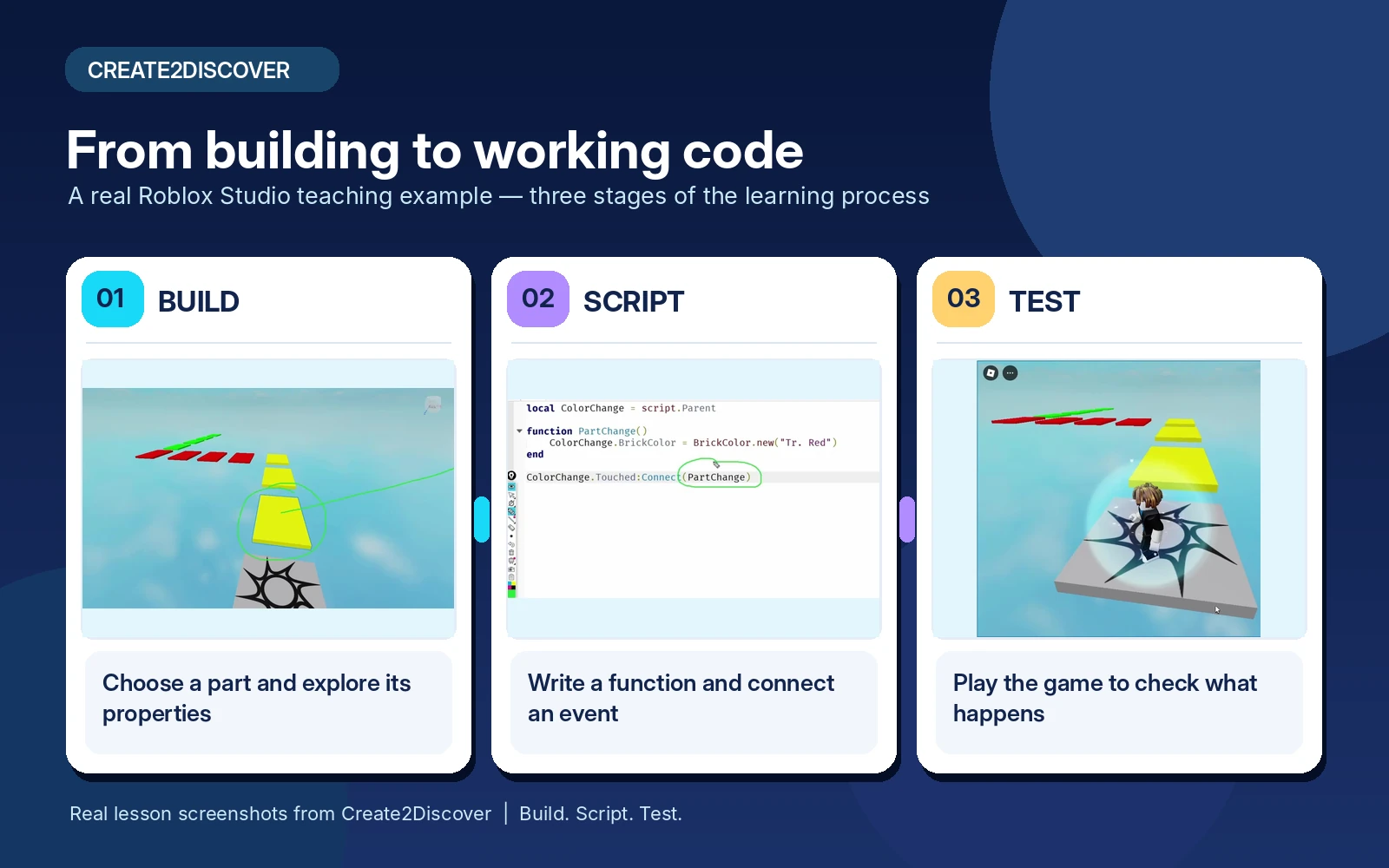
Explore a beginner Roblox Studio scripting example.
Behind a simple button is a sequence of decisions: Which object should react? What event triggers the change? What happens the first time? What happens the second time? If it doesn’t work, where do we start looking?
When students learn to reason through those questions, they are not just memorizing programming commands. They are learning to connect instructions with behavior and test whether their choices produced the intended outcome.
Those are exactly the kinds of questions a future creator should ask before accepting AI-generated code.
What Minecraft Modding teaches through procedures and rules
Minecraft Modding offers a different but equally concrete experience. With MCreator, students can create custom blocks, tools, items, and game behaviors. They use visual programming rules to tell the game when something should happen.
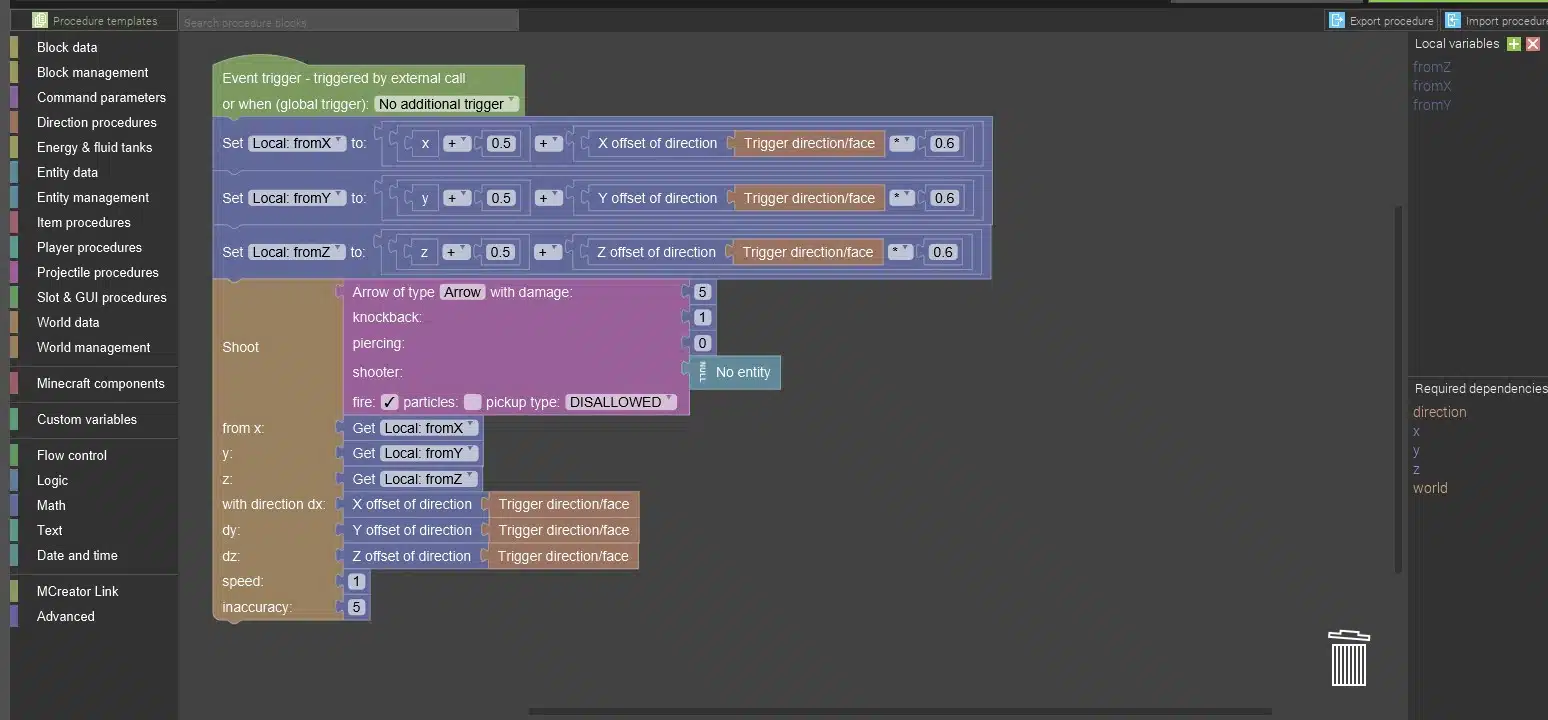
See an MCreator procedure example.
For example, an existing modding lesson asks students to make a tool activate an effect only when used on a chosen block. The interesting part isn’t merely making the effect appear. Students need to identify the trigger, choose a condition, check the correct block, test a different block, and figure out what to change if the rule behaves incorrectly.
That process has a natural connection to responsible AI use. A tool may suggest a solution, but a person still needs to know the intended result and decide whether it works.
Four habits that matter when kids eventually work with AI
1. Define a goal. A creator needs to explain what they want—not just ask for “a cool game.” In coding class, that means deciding the rules and player experience before building.
2. Break big ideas into smaller tasks. A game has parts that depend on one another. Students practice making a plan that they can build and test step by step.
3. Test and question the result. A working-looking game can still contain an error. Students learn to try both the expected case and the case that should not work.
4. Make creative judgments. Students choose what to keep, what to change, and what to improve. AI may offer many possibilities, but the student should remain responsible for the project’s direction.
None of this requires pretending that the learning process is always easy. Getting stuck, investigating a mismatch, and trying again are important parts of becoming an independent creator.
What Create2Discover teaches today—and what we’re building next
Our current core programs teach coding and game creation through Roblox Studio and Minecraft Modding, including self-paced beginner courses and live tutoring or private groups. Students work with real project components, programming logic, creative decisions, testing, and debugging.
We’re also developing a more deliberate progression toward age-appropriate AI collaboration. The idea is simple: first learn enough about how digital systems work to make informed decisions; then learn to give AI a useful task, question its suggestions, test the outcome, and build more ambitious original projects.
That full AI-integrated pathway is still being developed and evaluated. Today’s classes should not be understood as a promise of direct generative-AI tool access or a completed AI-specialist curriculum. What they offer now is the concrete foundation on which thoughtful AI use can grow.
Three questions parents can ask after a coding class
“What were you trying to make happen?” This helps children explain their goals and creative intentions.
“How did you know it worked—or why it didn’t?” This invites evidence, debugging, and reflection instead of only showing a finished project.
“What would you change if you could make it better?” This keeps the focus on ownership, curiosity, and improvement.
You don’t need to know Lua or visual coding to have those conversations. The goal is to encourage your child to explain their thinking.
Let your child start by creating something they care about
Roblox Studio and Minecraft Modding are familiar worlds for many children, but in Create2Discover classes they’re tools for creation. A student can move from enjoying a game to understanding what makes it work—and eventually to guiding more powerful tools with greater independence.
Explore the current Roblox Studio and Minecraft Modding options
For individualized live support, see 1-on-1 Coding Tutoring
For a separate look at independent learning, see how Roblox Creator Hub and thoughtful AI questions can support learning.
Want to try a lesson first?
Get four free game-creation lessons covering Roblox building, Roblox scripting, Minecraft modding, and MCreator procedures. The first lesson is delivered when the parent subscribes, followed by the existing lesson sequence. An adult should use the form and review the email consent terms.
Frequently asked parent questions
Does my child have to learn to program before they can use AI?
No single path fits every child or tool. AI can be useful in many age-appropriate contexts. We believe building something directly gives children a valuable basis for defining goals, understanding how systems behave, and checking whether a suggestion is sound. The amount and kind of prior coding experience needed will vary.
Are Create2Discover’s current coding classes AI courses?
No. The current core classes focus on Roblox Studio and Minecraft Modding. We’re developing a fuller AI-collaboration learning progression, but current offers should be evaluated on the coding, game-creation, problem-solving, and teaching experiences available today.
What if my child is more interested in playing than coding?
That interest can be a starting point. Students who already care about Roblox or Minecraft often have ideas about what they’d like to change or invent. Our goal is to help them take the next step from playing a game to creating their own project.